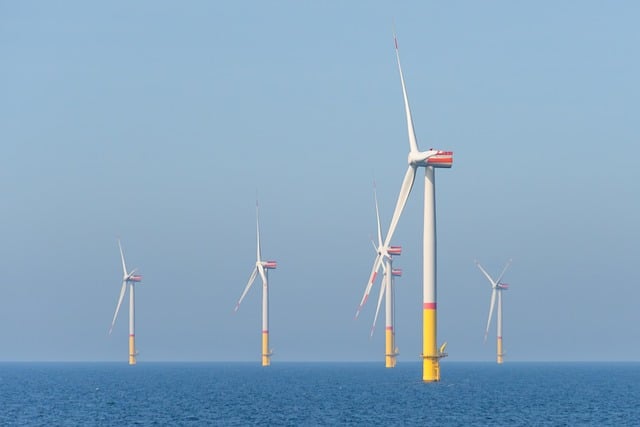

Wind farms have emerged as pivotal components in the global transition toward low‑carbon economies. Their ability to harness the kinetic energy of moving air and convert it into clean electricity makes them a cornerstone of renewable infrastructure. Beyond their primary function of power generation, wind farms contribute to a broader vision of sustainable development by reducing dependence on fossil fuels, minimizing air pollution, and fostering economic resilience in rural regions. As the world seeks pathways to carbon neutrality, the strategic deployment of wind farms will play a decisive role in meeting ambitious climate targets while supporting social and environmental goals.
Wind farms as engines of sustainable development
When positioned strategically, wind farms deliver a spectrum of benefits that align with the Sustainable Development Goals (SDGs). Their renewable nature directly supports SDG 7 (Affordable and Clean Energy) and SDG 13 (Climate Action). Moreover, by providing a stable source of electricity, they enhance energy security and enable the integration of other clean technologies. The presence of wind farms also encourages ancillary infrastructure development—such as roads, substations, and communications—thereby uplifting local economies.
- Significant reduction of greenhouse gas emissions compared to coal and natural gas plants.
- Minimal water consumption, preserving aquatic ecosystems.
- Encouragement of rural job creation in construction, operation, and maintenance.
- Facilitation of grid stability through energy storage partnerships.
Reducing ecological footprints
One of the most compelling arguments for wind farms lies in their ability to lower ecological footprints. By generating clean electricity, they displace high‑emission generation sources, cutting air pollutants such as sulfur dioxide and nitrogen oxides. Additionally, modern turbine designs prioritize wildlife safety, employing bird‑friendly blade configurations and real‑time monitoring to mitigate avian mortality.
“Wind farms are not just power producers; they are living ecosystems that coexist with nature when designed thoughtfully.”
Green technologies powering wind farms
The evolution of wind technology has been marked by continuous innovation aimed at increasing efficiency, reducing costs, and minimizing environmental impact. Recent advancements include floating offshore turbines, which unlock access to deeper waters with stronger and more consistent winds. In addition, the integration of advanced materials—such as carbon‑fiber composites—has led to lighter, more durable blades, thereby extending turbine lifespan and reducing maintenance frequency.
- Floating platforms enabling offshore deployment in shallow seas.
- Blade‑pitch control systems optimizing power capture across variable wind speeds.
- Digital twin analytics for predictive maintenance and performance monitoring.
- Hybrid systems combining wind with solar or battery storage to smooth output fluctuations.
Lifecycle analysis and carbon neutrality
Assessing the full lifecycle of wind farms—from material extraction and manufacturing to decommissioning—provides a transparent measure of their true environmental impact. Life‑cycle assessments (LCAs) consistently demonstrate that the embodied carbon of wind turbines is offset within the first two to three years of operation. Continued research focuses on optimizing supply chains, reducing material intensity, and developing recycling pathways for turbine components.
- Reduction of steel and concrete use through modular design.
- Recycling of composite blades at the end of life.
- Carbon accounting integrated into grid emissions modeling.
- Policy incentives encouraging circular economy practices.
Policy and community engagement
Government policies, incentives, and public participation are critical for the successful rollout of wind farms. Feed‑in tariffs, renewable portfolio standards, and streamlined permitting processes lower barriers to entry for developers. Equally important is engaging local communities to address land‑use concerns, cultural values, and equitable benefit distribution.
- Financial mechanisms that balance cost recovery with affordability.
- Transparent environmental impact assessments fostering trust.
- Community‑owned wind projects ensuring local stakeholding.
Case studies: success stories
Several regions illustrate the transformative potential of wind farms. In Denmark, the adoption of offshore wind has positioned the country as a global leader, achieving nearly 50% of its electricity from wind by 2025. New Zealand’s Onslow Wind Farm demonstrates how onshore turbines can coexist with agricultural landscapes, providing farmers with rental income and low‑maintenance energy. In the United States, the Gansu Wind Farm in China—despite being in Asia—has become a benchmark for large‑scale deployment, showcasing how coordinated grid integration and policy support accelerate wind adoption.
Economic impact and job creation
Wind farms serve as engines of local economic development, generating jobs across multiple stages of the supply chain. During construction, skilled laborers—such as electrical engineers, geotechnical experts, and crane operators—are employed intensively. In operation, turbines require a smaller workforce, but the need for specialized maintenance, grid integration, and data analytics persists. Furthermore, the revenue generated by selling renewable energy contributes to regional tax bases, funding schools, hospitals, and infrastructure.
- High construction employment rates compared to conventional power plants.
- Long‑term maintenance roles that often provide higher wages in rural communities.
- Opportunity for local businesses to supply components, services, and logistics.
- Increased property values through enhanced energy security and environmental quality.
Challenges and mitigation strategies
Despite their benefits, wind farms encounter challenges such as visual impact, noise concerns, and intermittent output. Addressing these requires integrated planning, community outreach, and technological solutions. For instance, adaptive noise‑control strategies, turbine placement optimization, and hybrid storage systems can reduce perceived nuisances. Moreover, rigorous environmental monitoring ensures that any adverse effects on wildlife are promptly managed.
- Public perception campaigns highlighting ecological and economic benefits.
- Advanced forecasting tools enabling grid operators to anticipate wind variability.
- Investment in battery storage and smart grid technologies to balance supply and demand.
- Research into blade design that minimizes sonic emissions.
Pathways to a carbon‑neutral future
Achieving carbon neutrality hinges on scaling wind farms in tandem with complementary renewable sources. Policies that encourage portfolio diversification—mixing wind, solar, and geothermal—enhance grid resilience and lower overall emissions. Additionally, integrating carbon capture and storage (CCS) with residual fossil fuel use can create a bridge while wind capacity expands. International cooperation on technology transfer and financing further accelerates deployment in developing economies, ensuring a shared commitment to a sustainable planet.
In conclusion, wind farms stand at the forefront of sustainable development, offering a blend of environmental stewardship, economic vitality, and technological innovation. Their role in reducing ecological footprints and driving the transition toward carbon neutrality is well documented. By fostering responsible policy frameworks, engaging communities, and continuing to push the boundaries of green technology, society can harness the full potential of wind energy. The future of clean power is not just a vision—it is an achievable reality grounded in the relentless pursuit of renewable solutions.